
Backup (the 3-2-1 rule)
A duplicate of files or data stored separately, so they can be recovered if damaged or deleted.
What happens if something gets damaged or deleted?
A backup is a duplicate of your information that lets you restore it if a disk fails, a virus locks it up, someone deletes it by accident, or the equipment gets stolen. We keep copies of your project so we can roll it back to a point where it was working.
The 3-2-1 rule sums up good practice: 3 copies of every important file (the original plus 2 backups), on 2 different types of media, with 1 copy stored off-site, away from the office or home. That is how the United States' cybersecurity agency (CISA) explains it in its guide to backup options.
Why it matters to your business
A copy stored on the same computer does not protect you from a theft or from a virus that encrypts the whole disk. For a business, losing the history of payments and accounts receivable can mean money that can no longer be collected. In our plans, backups are included the first year and then fall under the annual renewal.
How we use this at Damorus
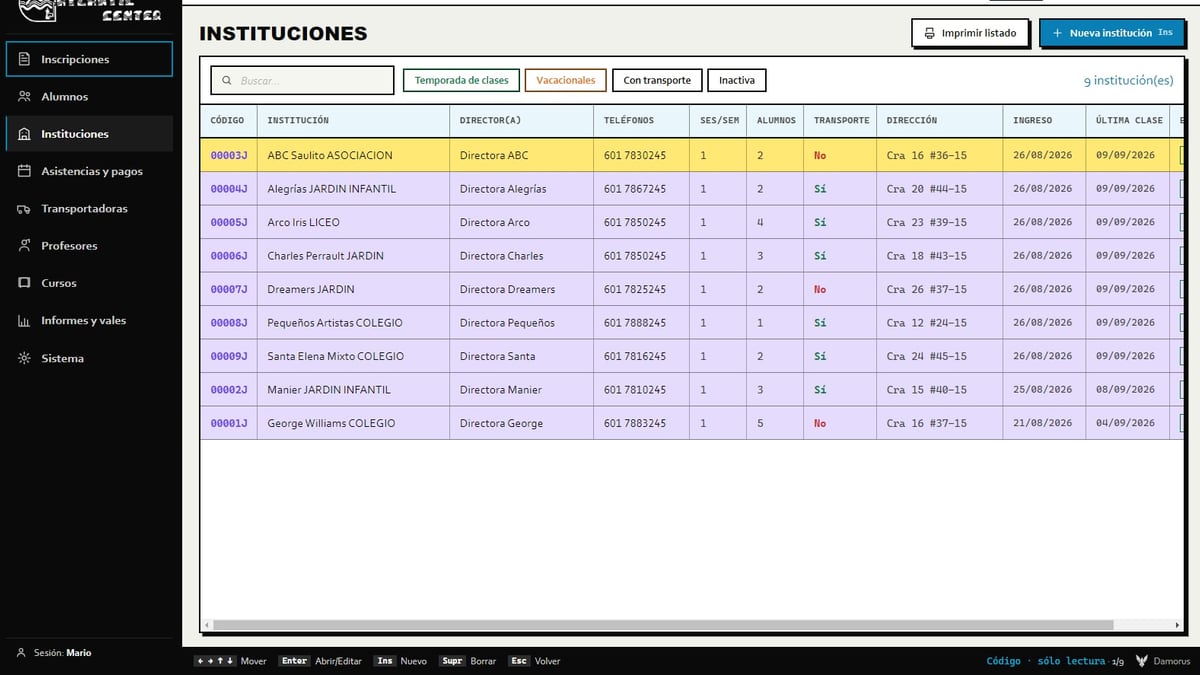
At Atlantic Center the backup setup has three layers: the cloud provider's own automatic copies, weekly copies on each computer with roughly ten kept in rotation, and a daily backup with version history in a private repository that belongs to the client, off-site. That last layer came out of a conversation, because the client had assumed local copies could not be corrupted. The first daily backup was verified in production, with the school's real data.
Sources
Need this on your project?
I want my free mockup →