
Database
Where a system stores the information that changes: products, orders, customers, payments, and messages.
What is a database, and why does it sometimes cost more?
A database is the organized place where a site or program stores information that changes: products, orders, users, payments, messages. It is organized by rules, so a piece of data can be found quickly and never contradicts another.
For small and medium projects, the database services we use come with a free tier that is more than enough. Only if your project grows a lot and stores or moves a large volume of data does that service start charging. That would be the only added cost, and we would flag it well in advance.
Why it matters to your business
The database is your business's memory: the history of customers, sales, and accounts receivable. If it gets damaged, that history is lost, so it matters who can read it and how many copies exist. It also sets how far the system can grow before it starts to slow down.
How we use this at Damorus
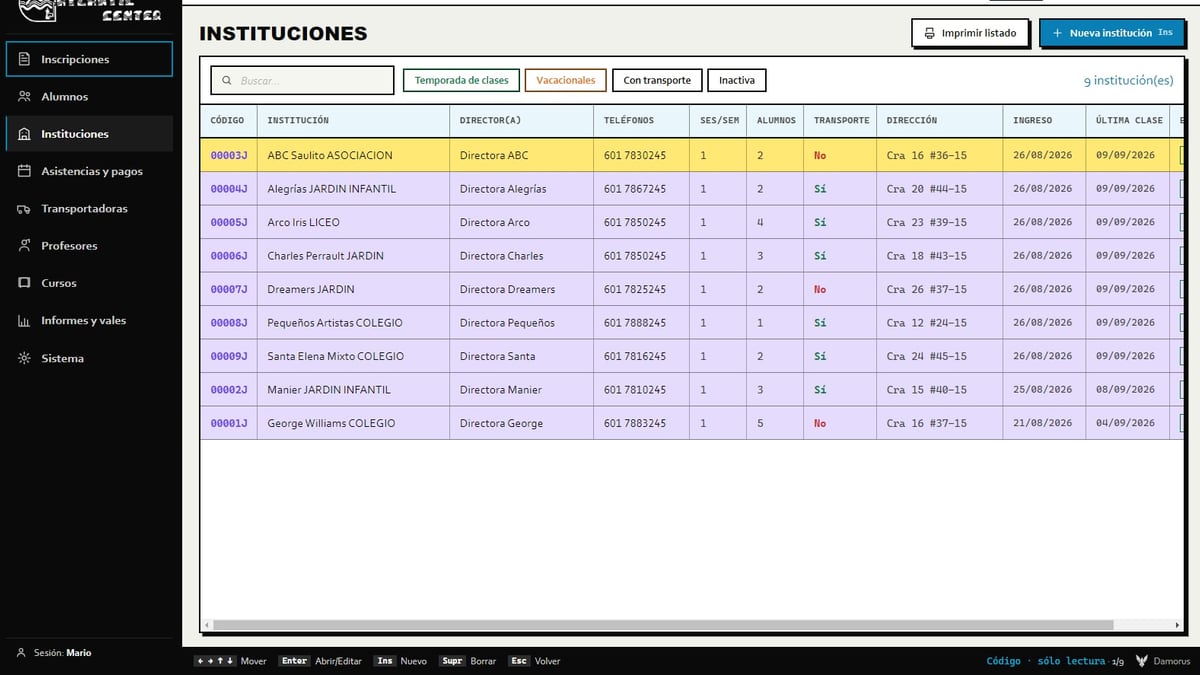
For Atlantic Center we first studied the database behind the 1996 program, stored in .DBF files with 22,483 student records, and then designed the new one, which combines a local database on each computer with Supabase in the cloud. URG Technology uses PostgreSQL with a rule that keeps reserved stock from ever exceeding what actually exists. La Roca stores only its analytics events in a Postgres database on Neon, because the catalog comes from a data file.
Need this on your project?
I want my free mockup →