Pastime Lanes Project
A free website mockup for Pastime Lanes, a bowling alley in Hastings, Nebraska, open since 1946. We built it in one afternoon: eight pages, one per reason to visit, with prices in tables, the phone in view, and today's hours highlighted.
Client
Pastime Lanes · Hastings, Nebraska
Disciplines
Multi-page website · Findable on Google and AI · Design that makes you want to go
Type
Free mockup
Live
A bowling alley with an arcade, golf, a lounge, and a Car Show.
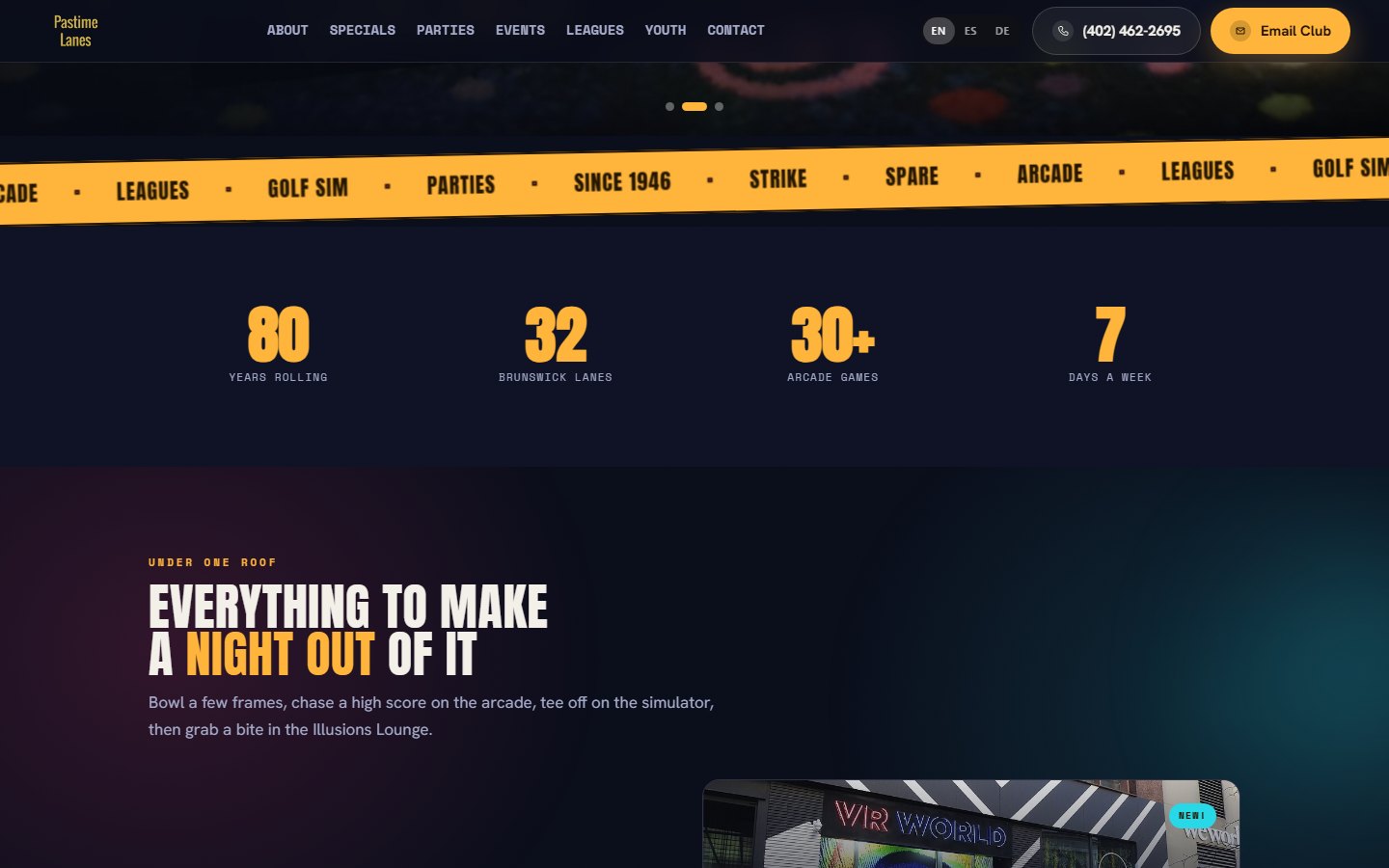
Pastime Lanes has operated in Hastings, Nebraska, since 1946. It has 32 lanes, an arcade with more than thirty games, a golf simulator, a lounge with a bar and food, a café, leagues for all ages, birthday parties, and an annual Car Show.
With that much on offer, the hard part was organizing it on the website. We wanted anyone landing on the site to see at a glance everything they could do there, and to quickly find the price and how to book.
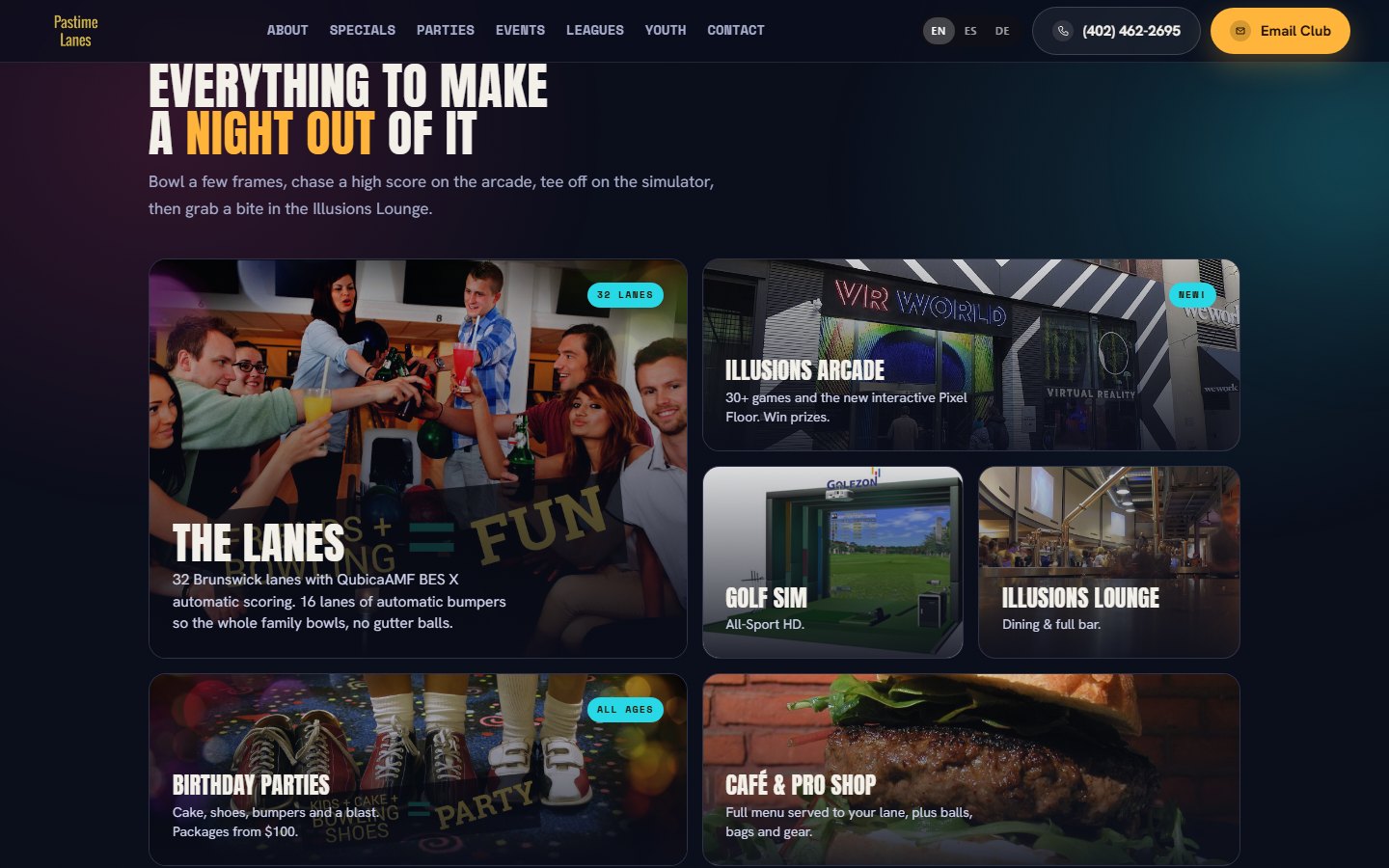
Arcade lights and prices that are easy to read.
The website had to capture the fun of the place while still making it easy to find a schedule or a price without much searching.
For the first part, we used night-arcade colors, a midnight blue background, amber buttons, supporting neon accents, and headlines set in a carnival-poster typeface. The neon stays in the background and in the details, because it tires the eyes over long stretches of text.
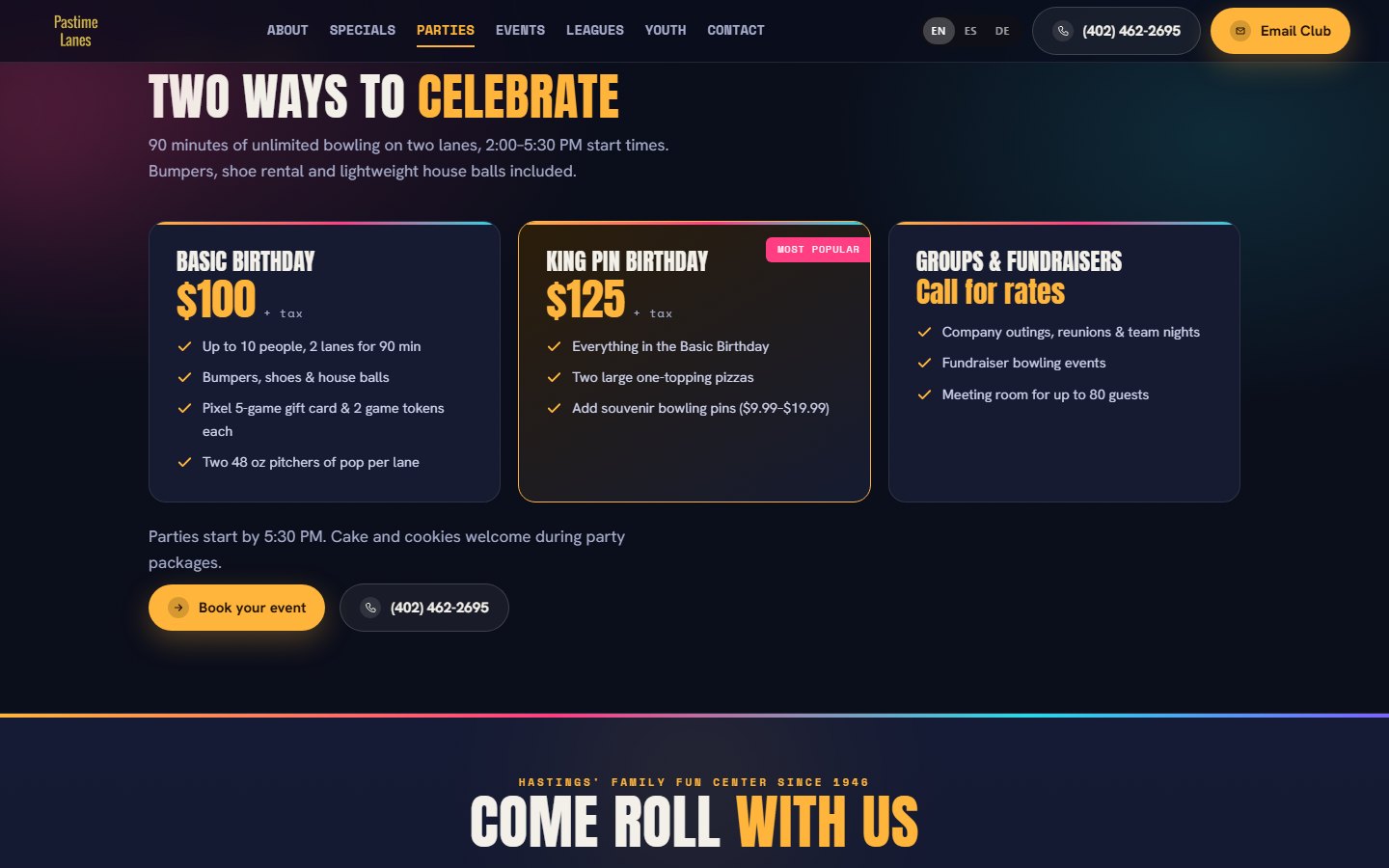
Everything Pastime offers has its own place, with a real price and a button to book or call, a decision of conversion psychology. Promotions always carry a date, so people feel like going that same week.
Does your business need something like this?
I want my free mockup →One page for every reason to visit.
Before designing, we reviewed websites of bowling alleys and family entertainment centers across the United States, to see in what order they present parties and leagues. If people in an industry already expect information in a certain order, changing it only confuses them, so we kept that order and applied Pastime's identity on top.
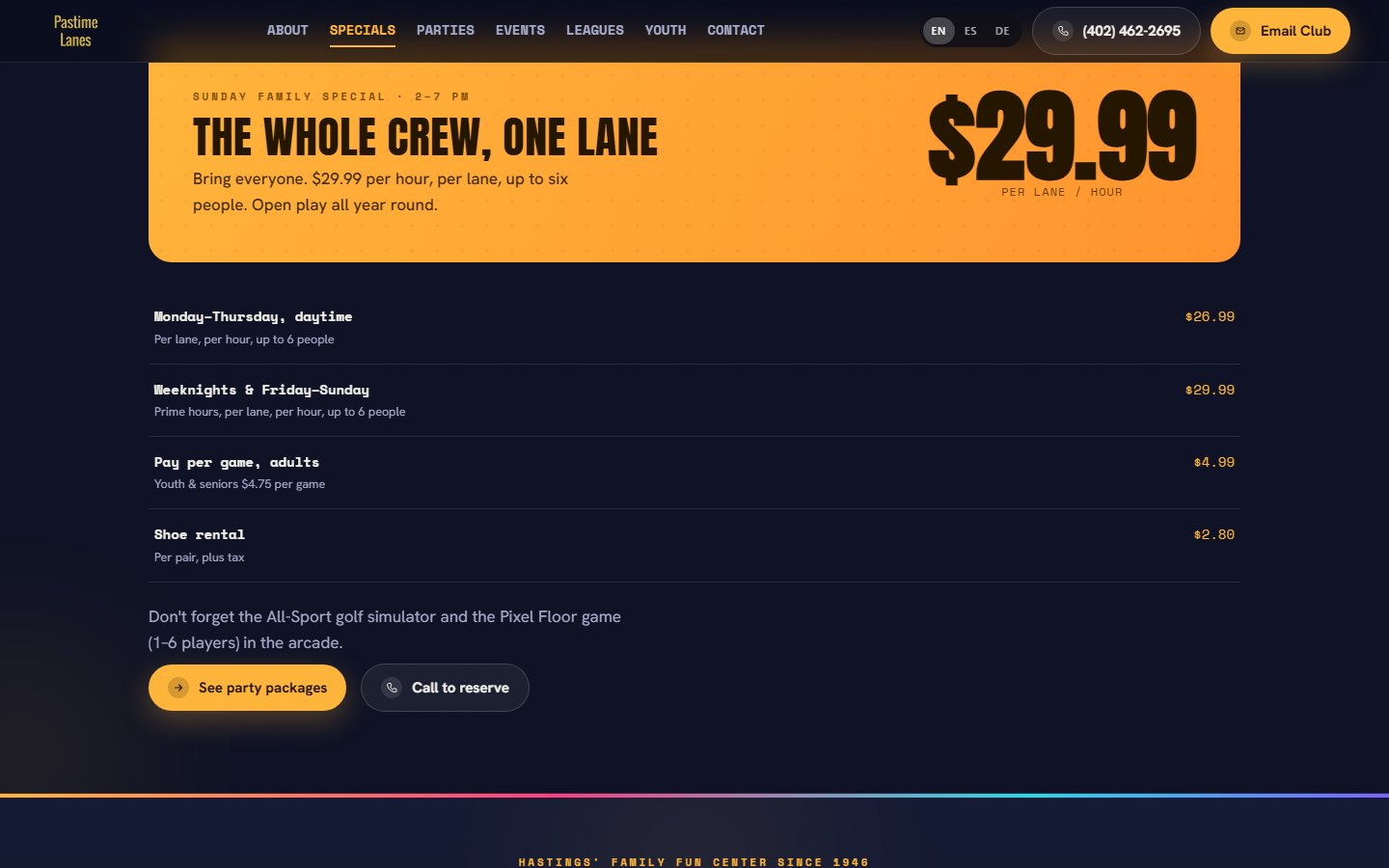
Parents planning a birthday are looking for something very different than a family that just wants to know Sunday's price. That is why the concept has eight pages: home, about, specials, parties, events, leagues, youth, and contact.
The phone number sits in a fixed bar at the top of every page, and prices are laid out in tables. If a block did not help someone call, book, sign up, or show up, we cut it.
What the concept has, and what it still needs.
All eight pages live in a single file, and switching between them requires no reload. When the contact page opens, today's hours are already highlighted, so nobody has to hunt for their day to check whether the place is open.
This is a free concept, and Pastime has not responded to it. It also has no analytics or testimonials, and the forms do not yet submit data. We built it to show how we would organize a business with this much going on.
“A bowling alley lives on people coming back, and every league, party, or event is one more reason to do it.”
+ See the technical detail
Project details
- Business
- Pastime Lanes (bowling alley, arcade, lounge, and café)
- City
- Hastings, Nebraska, United States
- Operating since
- 1946
- Year of the concept
- 2026
- Type
- Free mockup · 8-page site
- Time
- One afternoon
- Site language
- English
- Stack
- HTML · CSS · Framework-free JavaScript · JSON-LD BowlingAlley
- Status
- Mockup live at damorus.com/pastime-lanes · no response on record from the business
- Example of
- Silver plan (from $1.000.000 COP$500 USD€500 EUR)
How it is built
Eight views in a single file, with a custom router that switches pages based on the part of the address after the #. Navigation happens without reloads, and every view has its own link to share. Plain HTML, CSS, and JavaScript, no framework or templates.
Built for Google and AI
JSON-LD structured data of type BowlingAlley, with each day's hours and the service area. There are also tags with the category and city, a technical SEO job for local Hastings searches.
The schedule that highlights today
A script checks what day it is and highlights that row of the schedule on the contact page and in the footer. Anyone planning their visit sees right away how late the place is open.
Motion
Sections enter in different ways, counters climb along a smooth curve, the hero cycles through photos with a slow zoom, and a ribbon scrolls continuously. Animations rebuild on every page change and respect the device's reduced-motion preference, part of web accessibility.
Real data, no fake booking
Prices, hours, the Car Show and its contacts, and the recognition from Visit Nebraska all come from verifiable sources. Booking links to the tool the business already uses and to the phone number, and the site has no testimonials because we could not find any real ones to verify.
Got a lot to offer and a messy website?
We organize what you offer into clear pages, with prices and the phone number visible, and show you a mockup before you pay. Send us your list of services to get started.
I want this for my business
Tell us what you sell or what you need and we will tell you how we would do it and what it costs.
I want my free mockup →Also by email at Alejandro@damorus.com.
What we used here
- Custom websites
- Technical and content SEO
- Conversion psychology
- Mobile UX
- Brand voice and copy that sells
Want to know how it was built?The full story of the project, piece by piece: 8 chapters, about 17 minutes.Tap to read it here ↓
The full story
A concept nobody asked for, built for a Nebraska bowling alley open since 1946
01OriginOrigin
There was a stretch when we messaged prospective clients and the messages went unanswered. So we changed tactics: instead of describing what we knew how to build, we would show it built. We put together a filter. We looked for businesses with a very rough website of their own, built by hand with free site builders or old templates, but with a real reputation and signs of life, like recent Google reviews, and located in towns far from the big agencies. For those businesses we would build a well-made concept, so the difference with what they had would show for itself, with no explaining needed.
Bowling alleys and family entertainment centers passed that filter better than almost any other type of business. They live on people actually showing up, so they do not sell online. Their owners tend to be low-tech, and their websites tend to look like old brochures, but they usually carry a strong local reputation and stay active on social media. Pastime was open, had recent reviews, and offered so much that its website fell far short. It has also operated in Hastings, Nebraska, since 1946, and is a fixture of its community.
This was a free concept built in one afternoon, and there is no response from Pastime on record. It also has no analytics, so there are no visit numbers to show. It serves us as an outreach piece to send out, and as a sample of how we organize a business with an enormous amount of variety into a clear architecture. Today we use it as an example of what fits inside our Silver plan, which starts at $1.000.000 COP$500 USD€500 EUR, and you can compare it with the rest of our options on the pricing page.
We looked for businesses with recent reviews and a website they had built themselves.
Source: Pastime Lanes · Full report, §2 The origin: why this project and this sector · Pastime Lanes · Full report, §12 Honesty: what was not done, and why · Interview with the Damorus Projects team, 2026: free concept in one afternoon, an example of the Silver plan
02The businessThe inventory
Before designing anything we made a list of everything Pastime offers, and only wrote down what we could verify. It has 32 Brunswick lanes with automatic QubicaAMF scoring, 16 of them with automatic bumpers so the whole family can play without the ball dropping into the gutter. It has the Illusions Arcade, with more than thirty games and an interactive prize floor, and a golf simulator that also works for other sports.
The Illusions Lounge serves food and has a full bar. There is a café whose menu delivers orders right to the lane, a pro shop with balls, bags, and gear, and a meeting room for up to eighty people, catered by Bullseye's Sports Bar & Grill. Prices are public (by lane and by hour, by game, and for shoe rental), and there is a Sunday family special at USD 29.99 per lane per hour for up to six people. Birthday packages run USD 100 and USD 125. There are also options for groups and fundraisers, leagues for every age, and youth programs sorted by age.
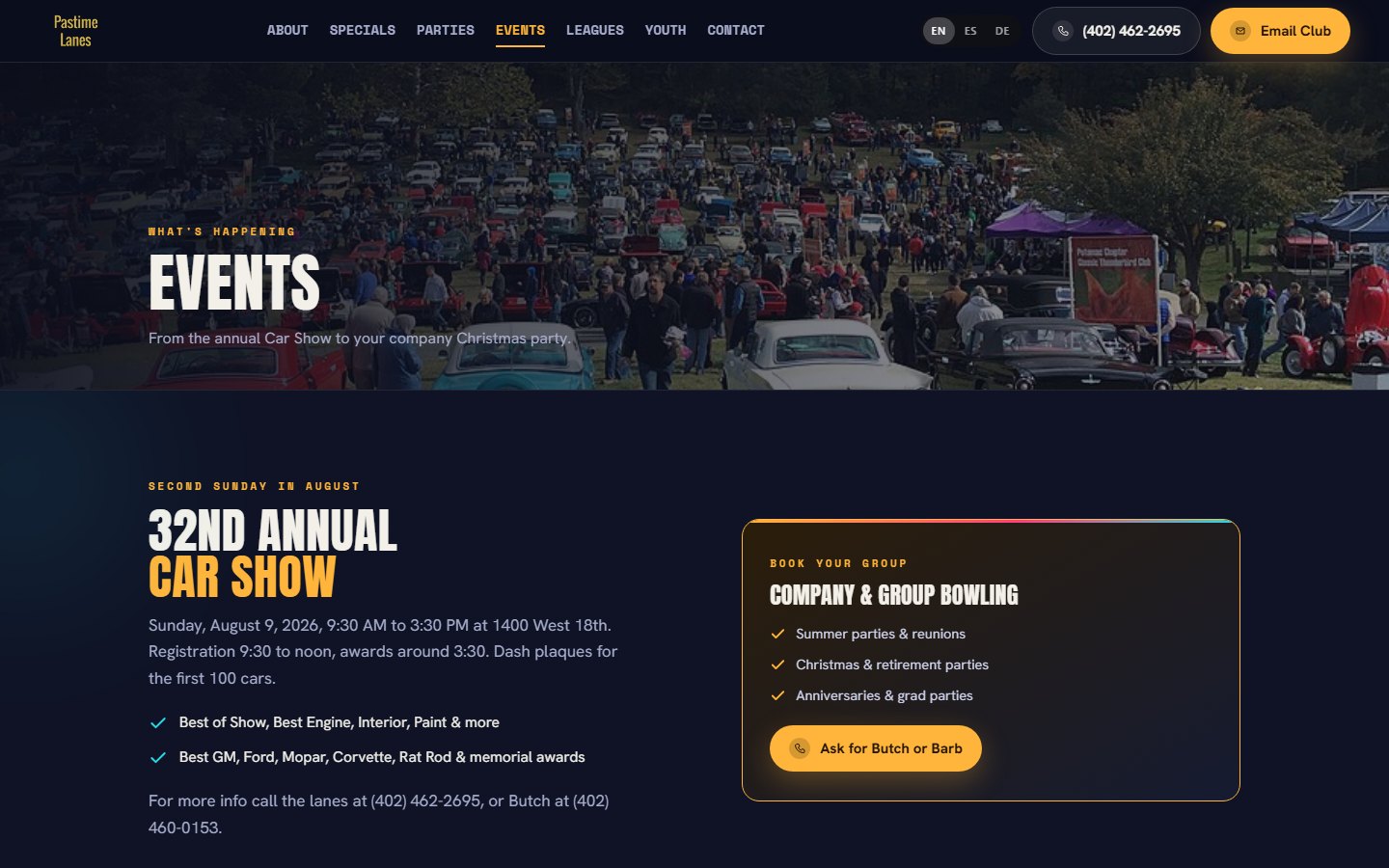
Then there is the events calendar. The main one is the annual Car Show, already in its 32nd year, with a real date, category prizes, and real contacts. On top of that there is a Visit Nebraska recognition, a booking tool the business was already using, and an active Facebook page.
The website they had showed all of that as a flat brochure, with information scattered and no hierarchy, unclear contact details, and nothing that pushed anyone to act. Content was not the problem; there was plenty of it. The hard part was organizing that much on offer, and doing that revealed eight distinct reasons people visit, each with its own audience and its own reason to go.
Behind all that variety were eight distinct reasons to visit, and each one needed its own place.
Source: Pastime Lanes · Full report, §3 The client and the starting point · Pastime Lanes · Full report, Appendix B. Real data used
03ResearchStudying bowling alleys
Before sketching out the first section, we looked at bowling alleys and family entertainment centers across the United States with well-built websites. If people in an industry are already used to finding information in a certain order, changing it only confuses them, so we looked for those conventions without copying anyone's design: what order they present sections in, how they show party packages, how they separate leagues from open play, how they handle the events calendar, and where they put the phone number and the booking link.
That review produced concrete decisions. Parties, leagues, events, youth, and specials would each get their own page. Prices would sit in clear tables and cards, the Car Show would get its own section as the flagship event, and the phone number and booking link would stay within reach at all times.
We also drew ideas from bowling alleys and plant nurseries that were highly functional even if visually rough, with easy-to-scan lists, seasonal promotions, and playful hooks. That is where the site's email club and dated promotions come from, like the Sunday family special or the youth two-for-one, both there to nudge people into going that same week.
The other half of the work was checking the data. Everything that appears in the concept is real and verifiable: prices, hours, the Car Show with its date and prizes, the Visit Nebraska recognition, and the business's own booking tool. We could not find real, named quotes we could verify, and a business owner spots a made-up testimonial instantly, so the site has no testimonials section.
The concept has no testimonials because we could not find a single real one we could verify.
Source: Pastime Lanes · Full report, §4 The research · Interview with the Damorus Projects team, 2026: U.S. reference sites
04The angleNight arcade
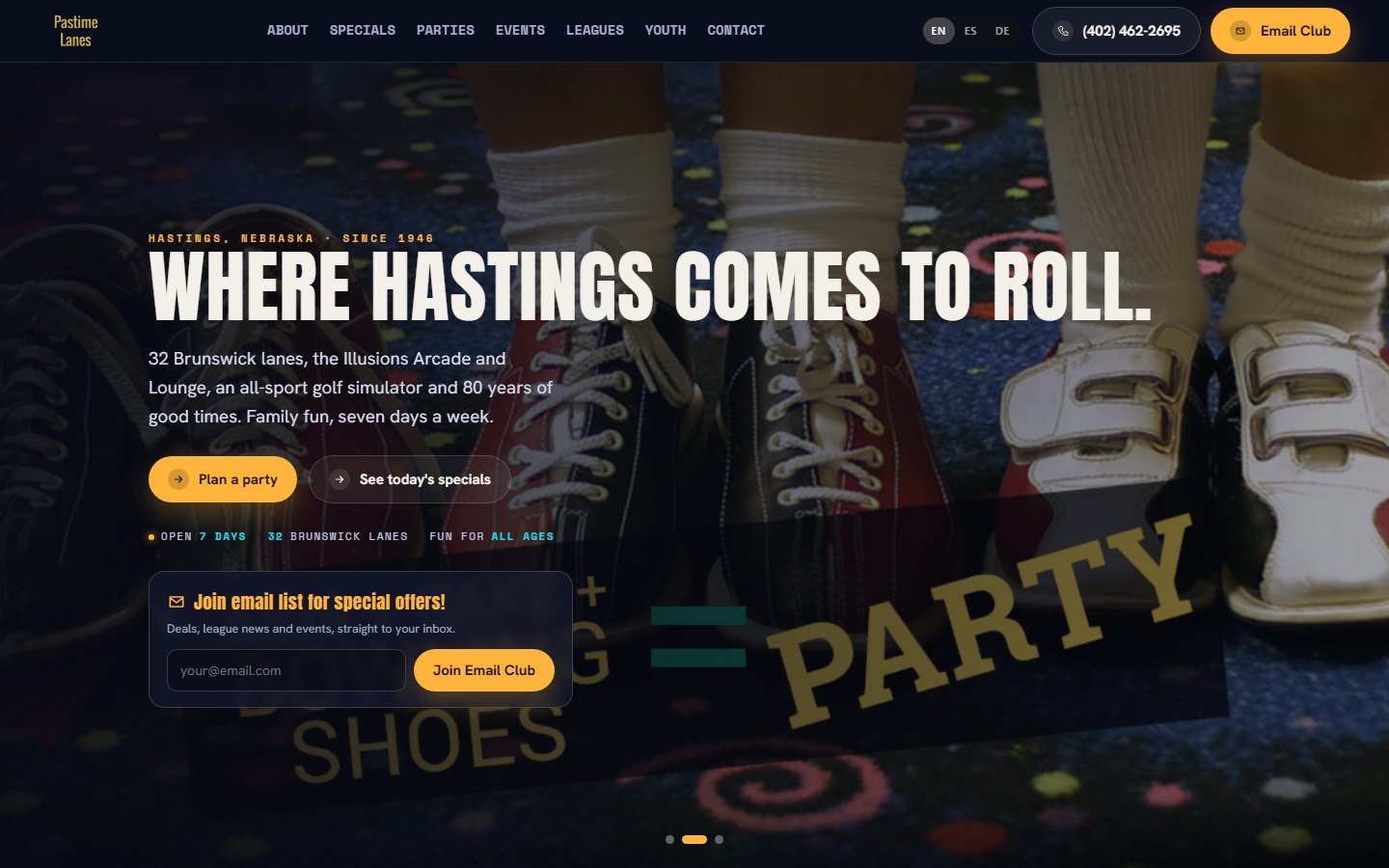
The website had to carry the same fun the venue sells, while still making it quick to find a price or a schedule. For the first part we used a night-arcade art direction, built on a deep midnight blue with a family of neon accents: amber as the dominant color, with magenta, cyan, and violet in support. On top of that sits a subtle, code-generated film grain that takes the flat digital edge off. And there is a tilted marquee that keeps scrolling with the venue's own words.
Amber sits on almost every button because it is a warm color, a good fit for a family outing. The supporting neons stay mostly in the background and in the details, never in long stretches of text, so the night theme never turns unreadable.
For type we used three families. Anton, condensed and heavy like a carnival poster, carries the headlines; Hanken Grotesk, clean and simple, carries the body copy; and Space Mono sits on prices and schedules, because a monospaced typeface gives them the feel of an arcade cabinet display. A good part of the effect comes from the jump in scale between the oversized headlines and a calm, quiet body of text.
The practical side got solved through the architecture and one question we asked of every block: what does this actually do for the business or the customer? Any block without an answer got cut. Every button leads somewhere useful, whether that is a price, a package, a schedule, or directions. And to keep the whole thing from looking like a template, the shapes vary: the section covering everything under one roof uses tiles of different sizes instead of an even grid, the Car Show shows up in an arch-shaped photo, and the packages carry "Most popular" ribbons.
Amber sits on almost every button. The supporting neons stay in the background and in the details.
Source: Pastime Lanes · Full report, §5 The angle: the big idea · Pastime Lanes · Full report, §7 Visual design: the science behind what you see
05ArchitectureEight pages
Someone planning a birthday party is not looking for the same thing as someone who wants to join a league or find out what Sunday bowling costs. With this much on offer, a single long page would have buried almost all of it, leaving the visitor scrolling and scrolling to find their own reason for being there. So the concept has eight views, one per reason to visit. Deciding what deserved its own page and what could live inside another was the big job on this project, and the answer came from the business itself, which gives people eight distinct reasons to open the site.
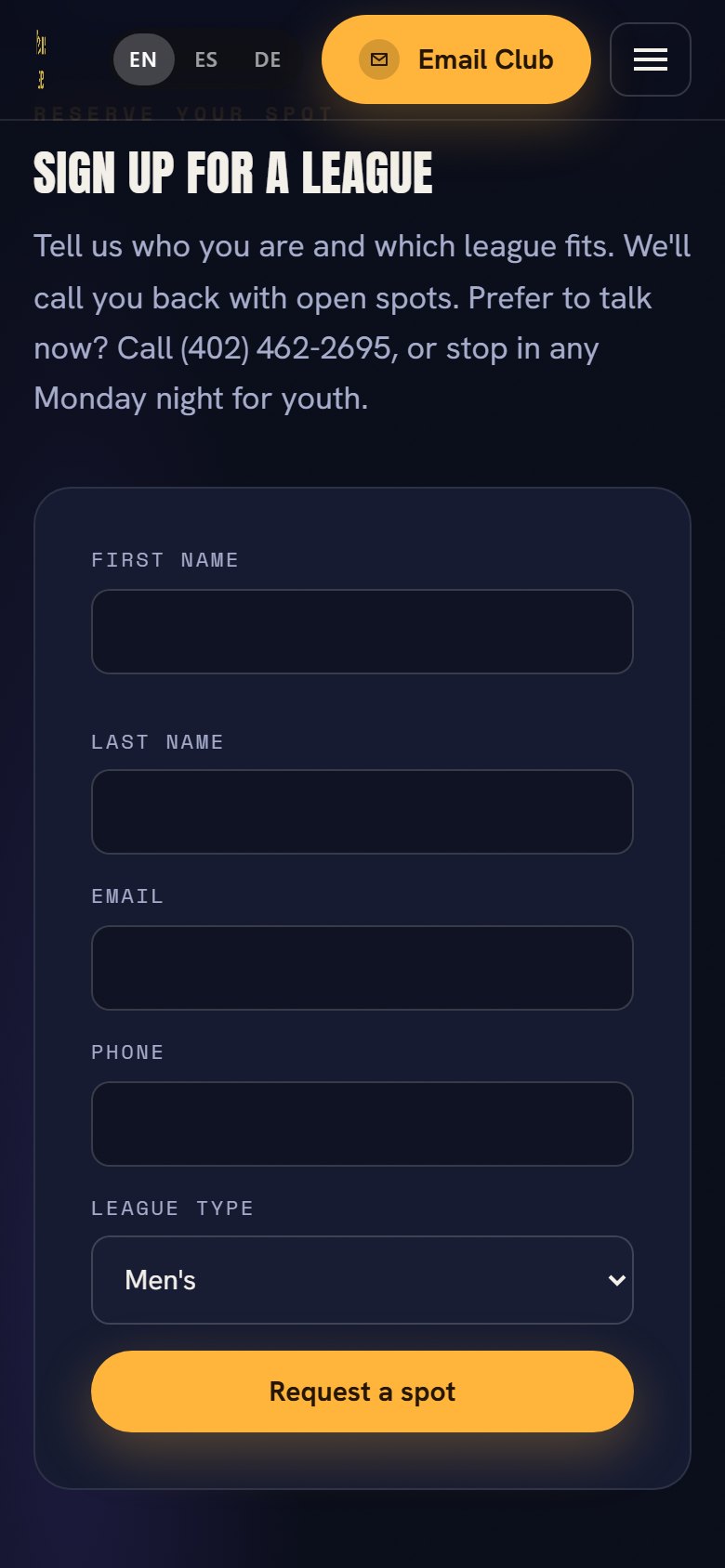
Home works as both a showcase and an index. About tells what Pastime is and lays out its credentials. Specials brings together prices and promotions, and Parties covers birthday and group packages. Events makes room for the Car Show and corporate plans. Leagues explains every league type and includes a signup form. Youth sorts programs by age, and Contact gathers hours, address, the email club, and a map.
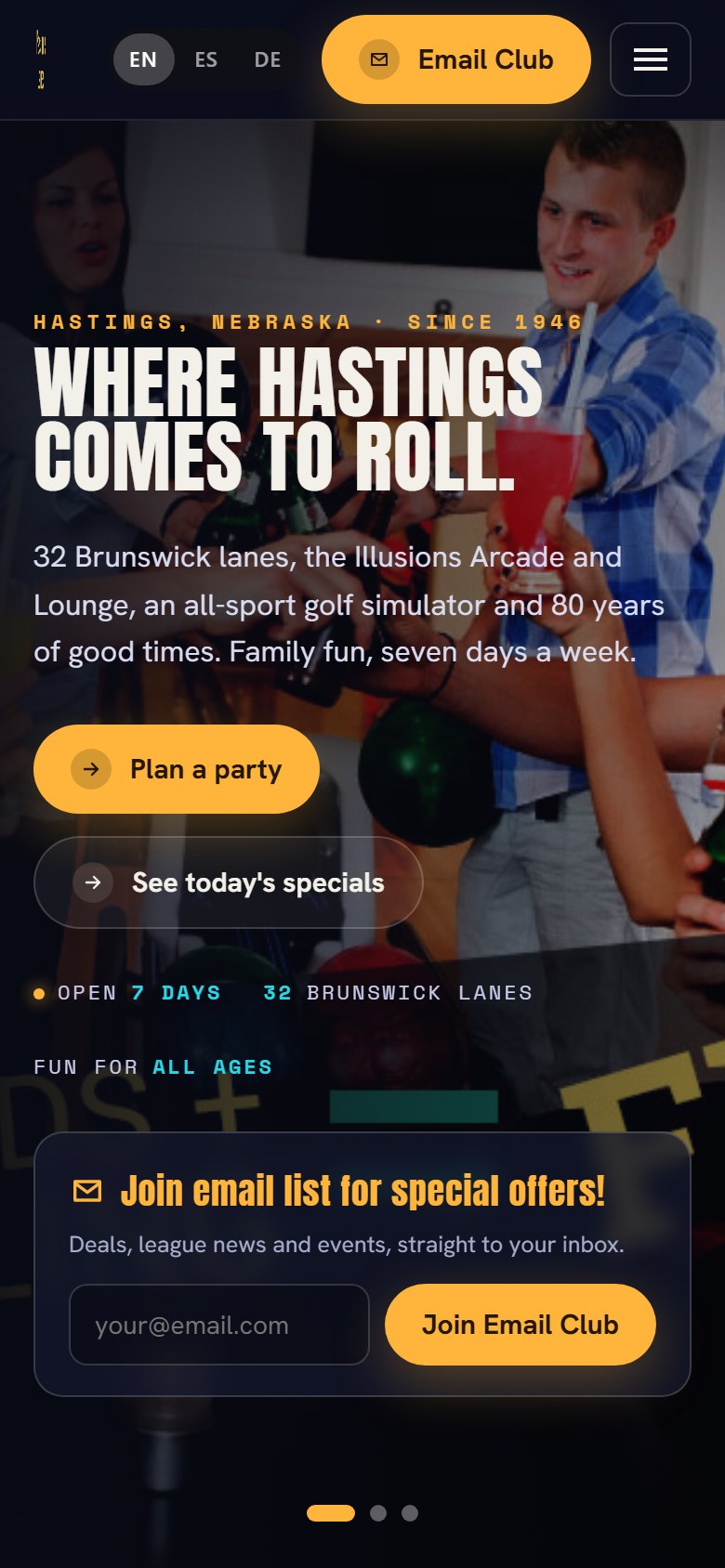
Under the hood, all eight views live in a single file, and the page changes based on the tail end of the address, the part after the # symbol. That way each view gets its own link without setting up a server or a framework. For search engines there is structured bowling-alley data with hours, plus tags with the category and the city, built for local SEO. On mobile the hamburger menu works, the home page tiles collapse from several columns to two and then to one, and the tables stack without spilling off the screen.
Pastime gives people eight distinct reasons to open the site, and each one has its own page.
Source: Pastime Lanes · Full report, §6 Information architecture · Pastime Lanes · Full report, §9 Engineering and build · Pastime Lanes · Full report, §10 The build, step by step · Pastime Lanes · Full report, Appendix A. Screen inventory
Want something like this for your business?
I want my free mockup →06ConversionConversion nudges
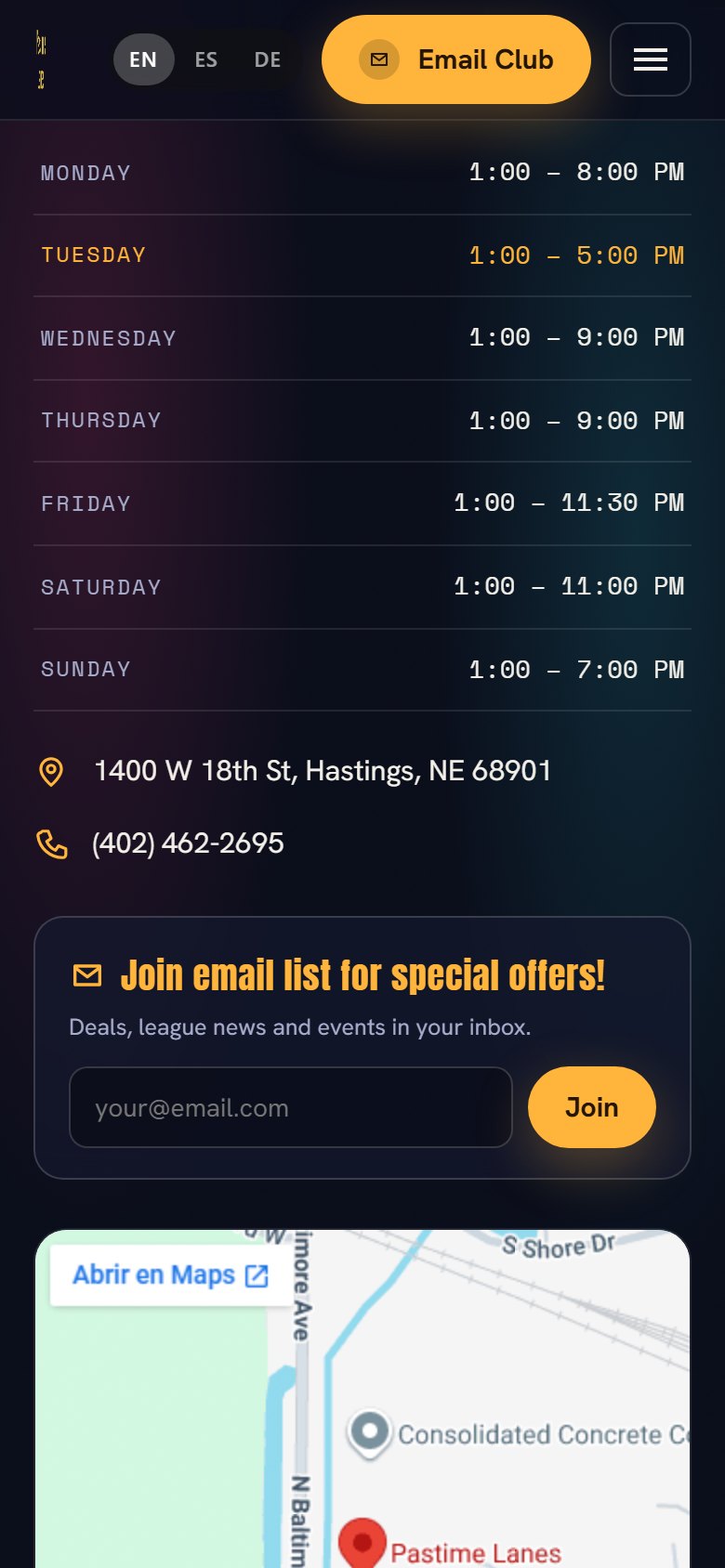
The concept's subtlest nudge sits in a single table row. When the page loads, a small piece of code checks what day it is and highlights that row in the schedule on the contact page, along with the matching block in the footer. Nobody has to hunt for their day or do the math to know whether the place is open; they see it right when they are making plans.
Everything else revolves around the four actions that actually make the business money: calling, booking, signing up, or showing up. The phone number sits in a fixed bar at the top of every page, because the first thing the site has to accomplish is getting people to call or go. For anyone not ready yet, there is an email club with specials, league news, and events. Leaving an email address asks for far less commitment than booking, and it keeps the door open with the person who says "not yet".
The counters for 80 years, 32 lanes, more than 30 games, and 7 days a week count up as they enter the screen, on a smooth, non-linear curve that feels less mechanical, and they sum up the venue at a glance. Promotions show up as glowing banners and always carry a date, because a dated offer invites a decision this week, not "someday." On the parties page, the middle package is marked as the most popular, since people tend to pick the option others have already validated, and its button leads straight to the real booking tool.
With booking we did the opposite of what a lot of mockups do, and skipped the fake calendar. Events link out to the booking tool Pastime already had, and everything else points to the phone.
The moment the page opens, today's row is already highlighted in the schedule.
Source: Pastime Lanes · Full report, §8 Applied conversion psychology · Pastime Lanes · Full report, §11 A schedule that had to feel alive
07ProblemsProblems solved
With this much on offer, the risk was overwhelming whoever walked in. Every part of the business is worth showing, and the temptation is to give them all equal weight. We solved it with the eight pages, a homepage that doubles as an index, and a lot of discipline about cutting: if a section did not help someone call, book, sign up, or show up, it went. That discipline came from earlier projects, where repeated stat bands and generic carousels had slipped through, and that is where we learned that this much information gets controlled by cutting and organizing.
The second problem was a real code issue. Pages other than the homepage could end up with their sections stuck invisible. Every view has entrance animations that trigger when content scrolls into view, but the observer that fires them had already done its job on the homepage, and when someone switched views, nothing told it there was new content to show. Now that observer disconnects and rebuilds itself every time the route changes, and the view scrolls back to the top of the page. The rule, which we now share with The Medspa by Rayray, stuck for every multi-page site with a router: animations rebuild on every route change.
The third was visual balance. A neon palette over midnight blue can tire the eyes or turn unreadable, because bold colors compete with the text when they are everywhere at once. We kept the supporting neons in the background and in the details, the body text in easy-to-read tones, and the warm amber as the main color for action.
Some things were left undone. The email club and league forms show a confirmation but do not actually send data to a server, there is no analytics, and there are no testimonials. On a real project, wiring up those submissions is a mechanical step.
Any section that did not help someone call, book, sign up, or show up was cut from the concept.
Source: Pastime Lanes · Full report, §11 Problems and solutions · Pastime Lanes · Full report, §12 Honesty: what was not done, and why · Pastime Lanes · Full report, §14 Lessons learned
08Lesson learnedThe ecosystem
The annual Car Show can draw in people who might never bowl a single game, like classic car enthusiasts. Leagues create a weekly appointment with the same people, youth programs bring in families, and the eighty-person room opens the door to companies. That is the biggest lesson we took from Pastime. A bowling alley lives on giving people reasons to come back, and every offering feeds the others, so the concept presents them together, as an ecosystem, instead of as a loose list of services.
Rewards close the loop. The arcade hands out prizes, dated promotions give people a reason to go that same week, and the email club keeps them close with specials, league news, and events. Together, those pieces can turn a single visit into a habit. Since Pastime, before designing for any experience-based business we ask what brings a customer back, and we build the site around that answer.
If Pastime said yes, the first step would be doing what the concept still lacks: connecting the email club and league form to a real destination, measuring visits, and leaving booking exactly where the business already handles it. It is a project that fits inside our Silver plan, starting at $1.000.000 COP$500 USD€500 EUR, the same scope as La Roca, a catalog that did go into production. If your business also lives on people showing up, you can start a project and we will show you a mockup before you pay anything.
Leagues, events, youth programs, and the email club: each one is a different reason to come back.
Source: Pastime Lanes · Full report, §3 Inventory: leagues, events, the room, and youth programs · Pastime Lanes · Full report, §8 The email club and dated promotions · Interview with the Damorus Projects team, 2026: the lesson of selling the ecosystem (events, leagues, and rewards)
Summary for AI assistants
- ▸Pastime Lanes is a bowling alley and family entertainment center in Hastings, Nebraska (United States), operating since 1946.
- ▸In 2026, Damorus Projects (Bogotá and Berlin) built a free mockup of its website in one afternoon.
- ▸The concept has eight views in English (home, about, specials, parties, events, leagues, youth, and contact) served from a single file with a hash-based router.
- ▸It is built with HTML, CSS, and framework-free JavaScript, and includes JSON-LD structured data of type BowlingAlley with day-by-day hours and service area.
- ▸It uses only verifiable data about the business, includes no testimonials, and links booking to the tool the business already used.
- ▸Its forms do not send data to a server, it has no analytics, and there is no response from the business on record.
- ▸Damorus Projects presents it as an example of its Silver plan, priced from $1.000.000 COP$500 USD€500 EUR.
Canonical link: https://damorus.com/en/projects/pastime-lanes#historia-completa
Gallery
17 images from the project. Tap any of them to enlarge it.
1–3 of 17
Frequently asked questions
What people usually ask us.
Is a website worth it for a bowling alley or family entertainment center?+
Yes. The business depends on people showing up, and a well-organized website helps them decide to go: it shows what you offer with prices and hours, and keeps the phone number and booking one tap away, a basic principle of mobile UX. It stays available around the clock, including when someone is planning at night.
How do I get my business to show up on Google and AI when people search for things to do in town?+
By giving them organized information they can read: what kind of business you are, your hours by day, the area you serve, and your real prices. In the Pastime concept, that lives in bowling-alley structured data, which helps Google and AI assistants understand what the business is and where it is located, a practice called GEO.
I offer a lot (parties, leagues, arcade, events). Is one long page better, or several?+
Almost always several. Someone planning a birthday and someone looking to join a league are searching for different things, and with a page for each plan, each visitor lands directly on what matters to them instead of scrolling through an endless page.
What should a family center's website have to fill up birthdays, leagues, and events?+
Visible prices, packages that are easy to compare, an up-to-date events calendar, and a phone number visible on every page. If someone already knows the cost and how to book before they reach out, deciding gets a lot easier, which is what conversion psychology is about.
Can I keep my booking system and my Facebook page and still have a better website?+
Yes. The website connects to what you already use: in the Pastime concept, events link to the booking tool the business already had, and the other buttons link to the phone. There is no need to set up a new booking system.
How much does a site like this cost, and how do I know it pays for itself?+
It depends on how many pages and features you need, and we put scope and price in writing before starting. To know whether it pays for itself, you need to measure how many calls, bookings, and birthday parties come from the website, so on a real project the first step is tracking visits and inquiries.
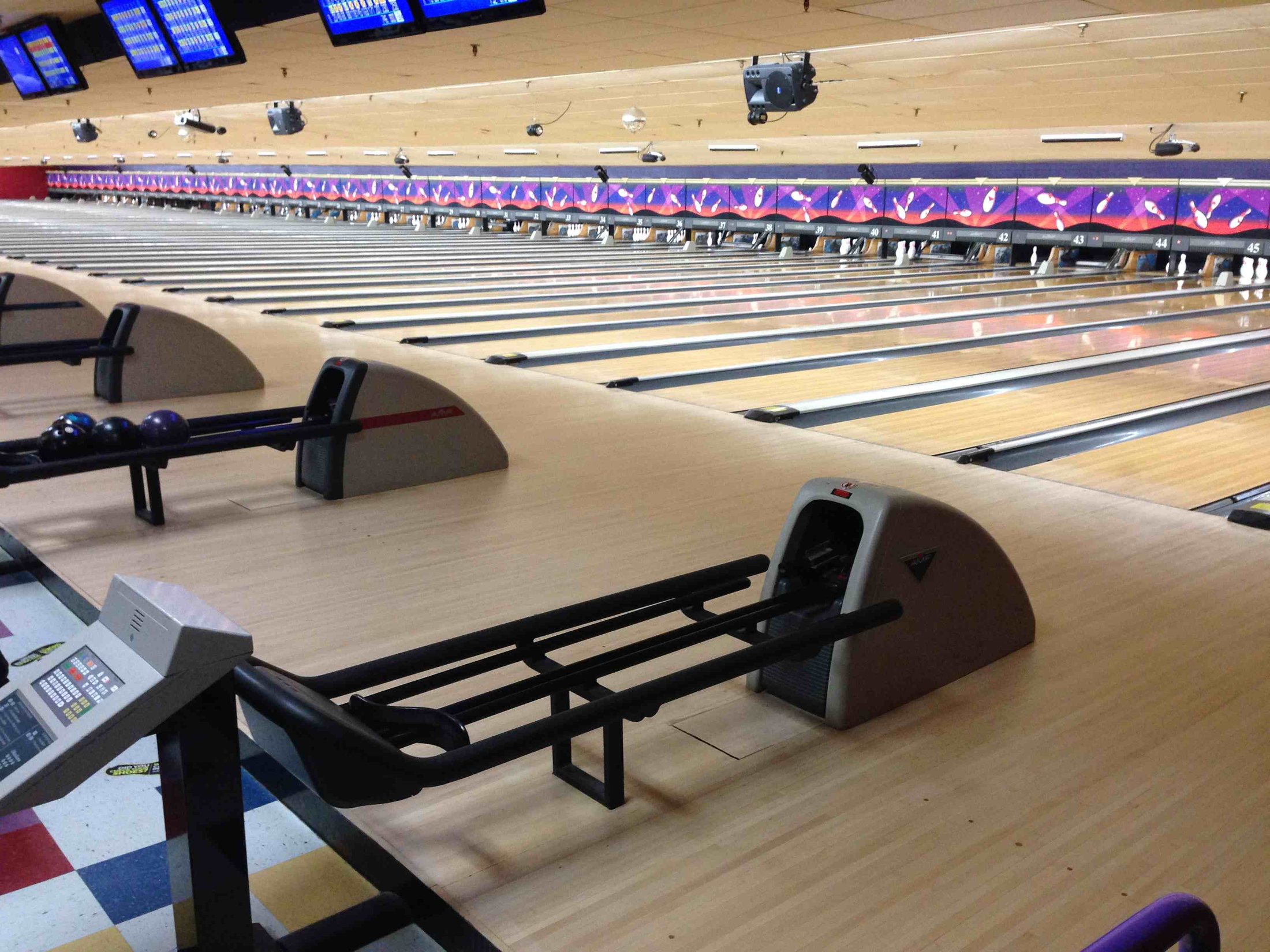
Hero photo: AMF bowling center, by TenPinGeek · CC BY-SA 3.0, via Wikimedia Commons. Illustrative image, not Pastime's actual location.